ABOUT BROKEN SOCIAL SCENE
Remember the Humans was shaped by reunion and loss in equal measure. When Drew and Newfeld reconnected after nearly 20 years apart, one hangout became what they call “a hurricane of fun.” During the recording, both lost their mothers – a shared grief that drew them closer. As Newfeld recalls, “our moms would have wanted us to do this, and get it right after 20 years of not working together.”
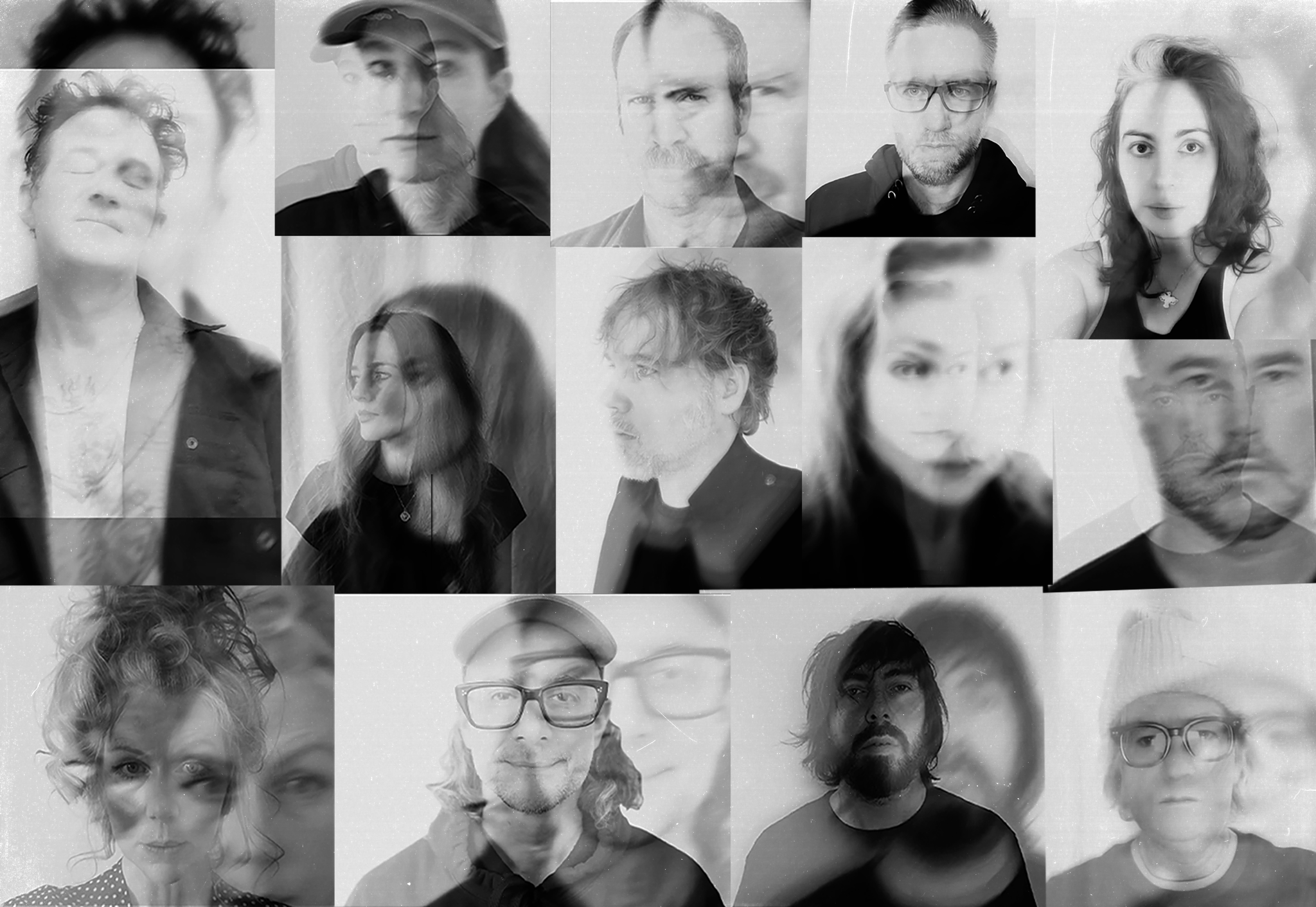
As ever, Broken Social Scene operates less as a band than as a community and songs evolve by ceding control to whoever can best carry them forward in the moment. Drew may be the designated driver, but collaborators on Remember the Humans, including Hannah Georgas, Lisa Lobsinger, and Feist, step into the foreground throughout the record, shaping songs with a sense of collective authorship that has always defined the group’s ethos.
The songs work because no one fully commands them. But this is where Newfeld matters most. As BSS’s Charles Spearin puts it, “his production suits the chaos of our songwriting so well…he’s got a childlike energy that is really contagious, when you get a piece of music that he loves, Oh my God, he’s bouncing like a little boy.”
The same unruly energy that keeps a band young can also trap it in its own past. Yet on Remember the Humans, Broken Social Scene have evolved with a deep sense of intention. It is the sound of a band deepening rather than reinventing, exploring the emotional implications of forms they’ve spent twenty years shaping. “There’s a different kind of honesty in this record,” says Spearin, “we’ve had success, we’ve lost friends, we’ve lost parents, we’re at this ‘what happens next?’ stage in life.” Remember the Humans is adult music in the best sense: contradictory, wounded, expansive – hopeful in a way that feels earned rather than declared. And it is also, in its refusal of control and its embrace of the ungovernable, a testament to something increasingly rare: art that is not optimized, not streamlined, not strategic.
BSS’s own evolution mirrors something happening outside it. After years of oversaturation and noise, the culture itself seems to have looped back to a craving for the raw, the communal, and the unguarded. The conditions that made You Forgot It in People feel necessary in 2002 have, in altered form, returned in 2026. According to Drew, “in 2026, you’re going to see a lot of resurgence of people going back to the roots of who they are, because things in their lifetime have gotten quite lost. I think we’ve let each other down, and I think it’s art that always tries to prevail, and tries to get us back on track.”
In a culture defined by abstraction and distance, Broken Social Scene have made a record that insists on the analog fact of human presence. It asks, gently, but insistently, that we remember each other, that we remember the human.
FOLLOW BROKEN SOCIAL SCENE
FACEBOOK | INSTAGRAM | TIKTOK | X | YOUTUBE | WEB